
Research student uses fluorometer
NEWPORT BAY CONSERVANCY
announces a call for proposals for
RESEARCH MINI-GRANTS
RELATED TO EL NIÑO
(for printable flyer, click here)
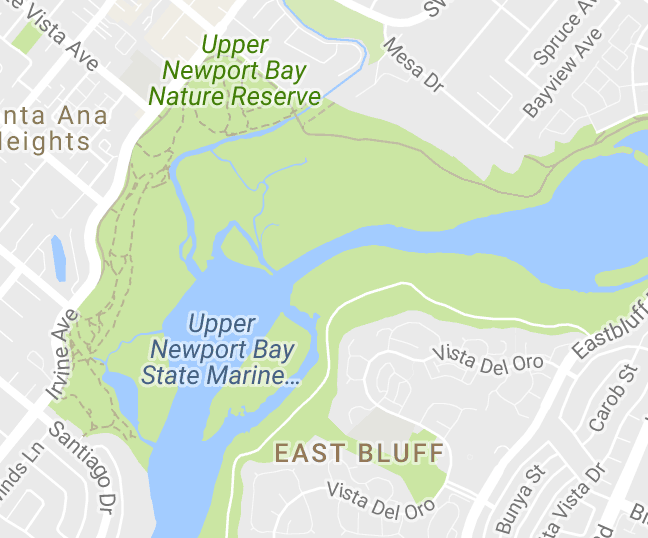
As part of their commitment to science-based management of the protected tidelands and uplands associated with Newport Bay, the Newport Bay Conservancy is pleased to announce the availability of mini-grants of up to $1,000 to support research that will that will increase our understanding of the effects of the predicted upcoming El Niño event. Funds are available for actual research costs, typically including equipment, supplies and services.
Submit your proposal for a research grant to support a one-year project related to Newport Bay. The proposed project must:
- comply with rules for access and collecting
- occur between March, 2016 and February, 2017, though support for already ongoing projects will be considered
- be consistent with at least some of the NBC priorities:
- Increase our understanding of the Bay or associated uplands
- Provide scientific support for CA-DFW and OC Parks management decisions
- Establish baselines and procedures for long-term monitoring of the Bay or associated uplands
- Provide preliminary data for outside funding applications
- Provide for involvement of NBC Naturalists in research projects
Applications should consist of a CV or resume, and a three-page proposal, with the first two pages devoted to explaining the background and motivation behind the project, the methods to be employed, the access and/or collecting permits already obtained or needed, and the personnel to be involved. The third page should explain the budget and justify the amounts requested in different categories (equipment, supplies, services).
Applications must be received by the February 19, 2016 deadline. The Research Committee will then select up to 3 applications to be presented to the Board of Directors for funding.
It is expected that the results of funded projects will be reported to the membership via NBC publications and meetings, and that NBC support will be acknowledged in publications and presentations reporting the results. Equipment purchased with these funds becomes the property of Newport Bay Conservancy.
ELECTRONIC SUBMISSIONS. Applications should be submitted in PDF format as a single document. Please entitle the document as: lastname.firstname.NBC2016.pdf and email to: dzacherl@fullerton.edu. Applications must be received by February 19. For further information contact:
Danielle Zacherl
Associate Professor and Chair of the NBC Research Grant Selection Committee
dzacherl@fullerton.edu
Department of Biological Science, Box 6850
California State University Fullerton
Fullerton, CA 92834-6850
We look forward to seeing your proposals!
NBC’s Research Committee
Learn about NBC’s Previous Funding Recipients